Engineering Rigor: How the SPP Single Post Lift Achieved Full EN 1493:2010 Compliance
For automotive workshop owners, premium home garage collectors, and international distributors, single-post vehicle lifts represent the ultimate space-saving layout. However, because the entire structural load is cantilevered off a single vertical column, engineering integrity and strict safety compliance are non-negotiable.
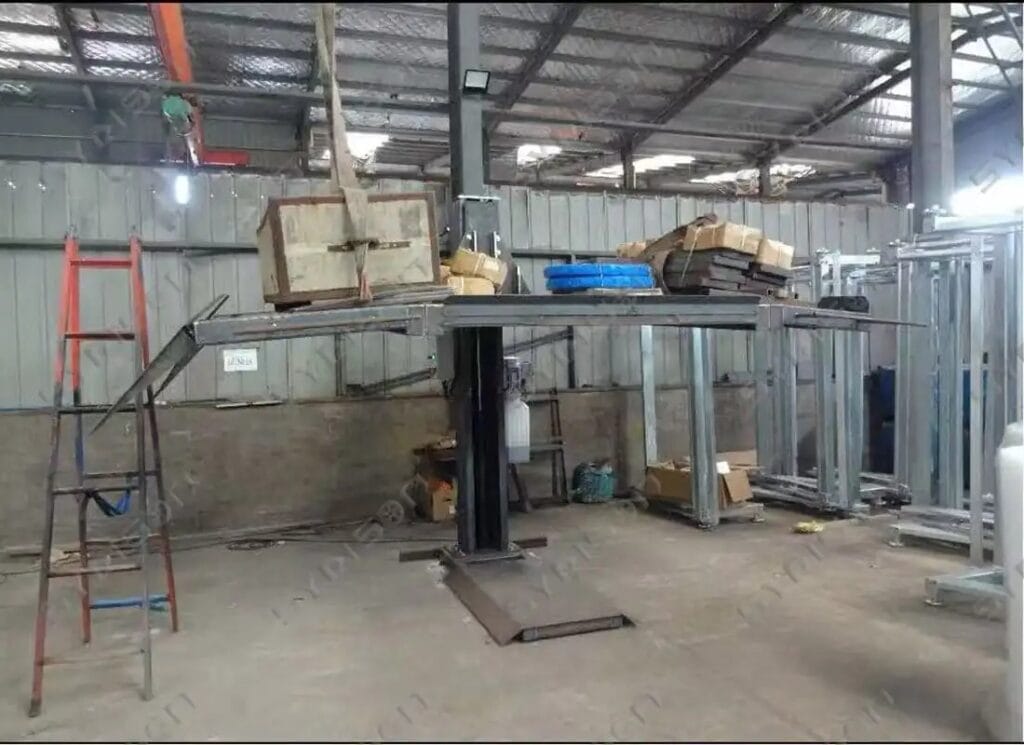
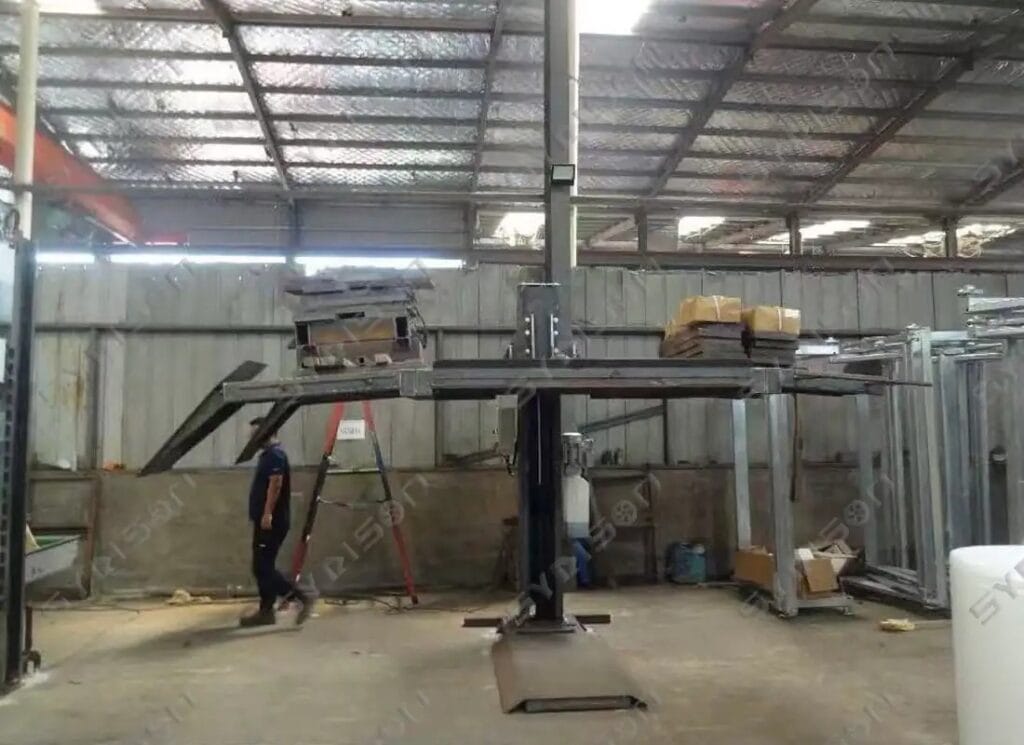
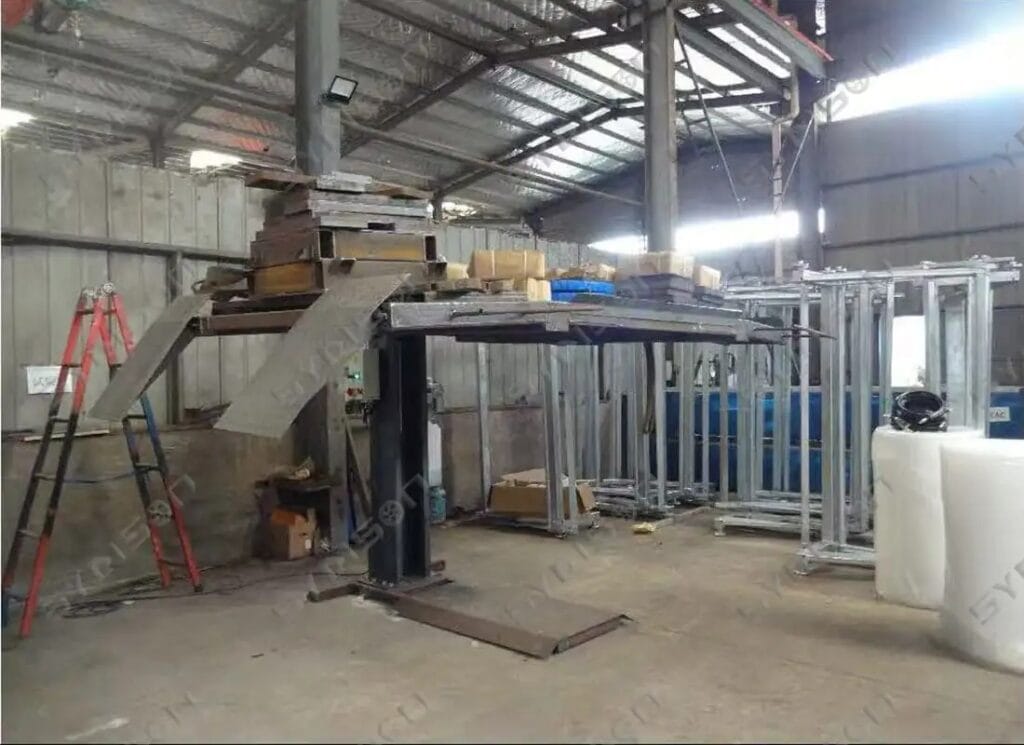
To provide absolute technical transparency to the global market, the SPP Series Single Post Lift (Serial No. 202207001) underwent exhaustive third-party performance and compliance testing in Qingdao, China. The system was pushed to extreme engineering limits to verify compliance with EN 1493:2010—the mandatory harmonized standard governing vehicle lifts.
Below is the verified data and technical breakdown from the official Lift Performance and Safety Test Report.
1. Load Distribution & Structural Proof Testing (1.5x Static Overload)
A true commercial-grade vehicle lift must safely manage uneven weight distribution, as standard passenger vehicles place a heavier burden on either the front or rear axles. Per EN 1493 Section 5.7.4, the SPP lift was calibrated to a strict 40:60 load ratio distribution based on its 2,000 Kg Rated Load ($R_L$).
1.15x Dynamic Overload Test: Loaded with 2,300 Kg (split 920 Kg / 1380 Kg), the lift was operated continuously between ground level and maximum height. The single hydraulic cylinder and heavy-duty carriage started and stopped smoothly with zero structural vibration, slack, or hydraulic pressure loss.
1.5x Static Overload Test: The structural limits of the post and carrying arms were challenged with a massive 3,000 Kg static load. Measurements taken at low, intermediate, and maximum lifting points confirmed zero permanent deformation to the column or structural arms, passing the toughest safety margin in the industry.
2. Synchronization Diagnostics: Deflection Under 49mm
Because a single-post lift utilizes a cantilevered platform structure, keeping the four corners of the vehicle tire/chassis supports aligned during travel is vital to prevent vehicle tipping.
During the multi-stage Synchronization Test, height metrics were monitored across four critical pick-up points (Points A, B, C, and D) under full rated load:
Ground Level Variance: Exceptional initial alignment was held within a tight 6mm to 8mm margin.
Vertical Travel Variance: Across four separate high-elevation measurement positions, the maximum recorded height variance between the outrigger arms remained strictly under 49mm.
As EN 1493 dictates that the leveling difference must not exceed 50mm, the SPP series successfully cleared the threshold, ensuring the vehicle remains balanced throughout the entire lifting cycle.
3. Hose-Burst Failure Simulation & Leakage Controls
What happens if a hydraulic hose suffers a sudden catastrophic failure in a busy workshop? To simulate this hazard, a Hose-Broken Simulation Test was conducted at heights exceeding 600mm without the aid of secondary safety gear.
Controlled Descent Velocity: Under 100% rated load (2,000 Kg), the descent speed during simulated pressure loss was regulated precisely to 36.9 mm/s. Under a 40% partial load, the speed clocked at 28.7 mm/s.
Compliance Verdict: Both metrics easily satisfied the EN 1493 mandate requiring that emergency lowering speeds must never exceed 1.5x the standard operational speed. The mechanical safety locks engaged flawlessly the moment the carrying device reached its locking position, preventing free-fall hazards.
4. Mechanical Arm Locking & Roll-Off Reliability
The structural safety of a vehicle lift extends beyond the main hydraulic column to the smaller, critical components that keep the vehicle locked in place:
Arm Locking System Force Resistance: Per EN 1493 Section 5.9.5, locking systems must resist horizontal forces equal to 4.5% of the lift’s capacity without permanent deformation. Fully extended at a height of 1.5 meters, the SPP long arms successfully resisted a horizontal force of 150 Kg (1,500 N) with zero deformation, and 225 Kg (2,250 N) without breakage.
Roll-Off Safety Device Test: To ensure vehicles cannot accidentally roll off the platform ends, the built-in end stops were subjected to extreme lateral loads. The end stops withstood a horizontal force of 20% rated load (200 Kg) without bending, and 30% rated load (300 Kg) without physical failure.
Velocity Thresholds: Standard operational lifting speed was clocked at 46.2 mm/s and lowering speed at 63.3 mm/s. Both metrics comfortably stay well below the maximum permissible speed threshold of 0.15 m/s (150 mm/s) required by international safety codes.
Secure Your Fleet with Verified Compliance
Investing in single-post lifting equipment requires looking past marketing brochures and examining verified engineering data. The SPP Single Post Lift proves that space efficiency does not have to come at the expense of structural safety.
By passing the rigorous criteria of EN 1493:2010, this system guarantees international distributors and workshop operators complete peace of mind, insurance eligibility, and structural liability protection.
Interested in distributing or sourcing the EN 1493 Certified SPP Single Post Lift? Contact our B2B technical sales division today to receive factory pricing and technical compliance details.