
Introduction
A parking lift is designed for long-term vehicle storage and space optimization. However, like any mechanical equipment, regular maintenance is essential to ensure safe operation, stable performance, and a longer service life.
Although different types of parking lifts share some common maintenance requirements, each structure has its own inspection points. A two post parking lift, four post parking lift, and scissor parking lift have different mechanical systems, so their maintenance methods are not exactly the same.
As a parking lift manufacturer, Syrison has supplied parking lift solutions for many years. Based on our installation and after-sales experience, this guide explains common maintenance requirements, typical problems, and practical solutions for different types of car parking lifts.
Why Regular Parking Lift Maintenance Is Important
Regular maintenance helps ensure:
1. Safe Operation
Parking lifts carry valuable vehicles every day. Regular inspection of safety locks, hydraulic systems, electrical components, and mechanical structures helps prevent unexpected problems.
2. Longer Equipment Service Life
Proper maintenance reduces wear on important components such as:
- Hydraulic cylinders
- Chains
- Wire ropes
- Sliding blocks
- Safety locks
A well-maintained parking lift can continue operating reliably for many years.
3. Lower Operating Costs
Small adjustments and regular inspections can prevent bigger problems and reduce unnecessary replacement costs.
Many Syrison customers have been using our parking lifts for more than 10 years with stable operation through proper maintenance.
Common Maintenance Requirements for All Parking Lifts
Although different parking lifts have different structures, several maintenance tasks are common for almost all systems.
1. Check the Steel Structure and Corrosion Protection
The steel structure is the foundation of every parking lift.
Regular inspection should include:
- Welding points
- Bolts and nuts
- Platform deformation
- Surface corrosion
- Paint condition
For outdoor installations, corrosion protection is especially important.
Syrison parking lifts can be customized with hot-dip galvanizing treatment for outdoor applications and environments with higher corrosion risks.
Regular cleaning and repairing damaged coating can significantly extend equipment service life.
2. Inspect the Hydraulic System
Most parking lifts use hydraulic power systems.
Regularly check:
- Hydraulic oil level
- Oil leakage
- Hydraulic cylinder condition
- Hydraulic power unit operation
- Abnormal noise during lifting
One common question from customers is why a parking lift cannot lift heavier vehicles.
In many cases, the equipment itself is not damaged. The lifting pressure may simply need adjustment through the relief valve on the hydraulic power unit.
3. Check Electrical Components
Electrical problems are another common area requiring attention.
Inspect:
- Control buttons
- Limit switches
- Sensors
- Motors
- Electrical connections
Based on our service experience, some customers report that the motor does not work or the safety lock cannot be released.
After checking customer videos, we often find that the problem is not the motor itself.
A common reason is an insufficient power supply caused by:
- Power cable being too long
- Cable diameter being too small
- Voltage drop during operation
Because the electromagnetic lock requires stable voltage, insufficient voltage may prevent the safety lock from releasing.
In most cases, replacing the power cable with a suitable diameter solves the problem.
4. Check Safety Lock Systems
Safety locks are one of the most important components of a parking lift.
Regular inspection should include:
- Lock engagement
- Lock release operation
- Limit switch function
- Mechanical locking condition
Never operate a parking lift if the safety locking system is not working correctly.
Parking Lift Maintenance Requirements by Type
Different parking lift structures require different maintenance methods.
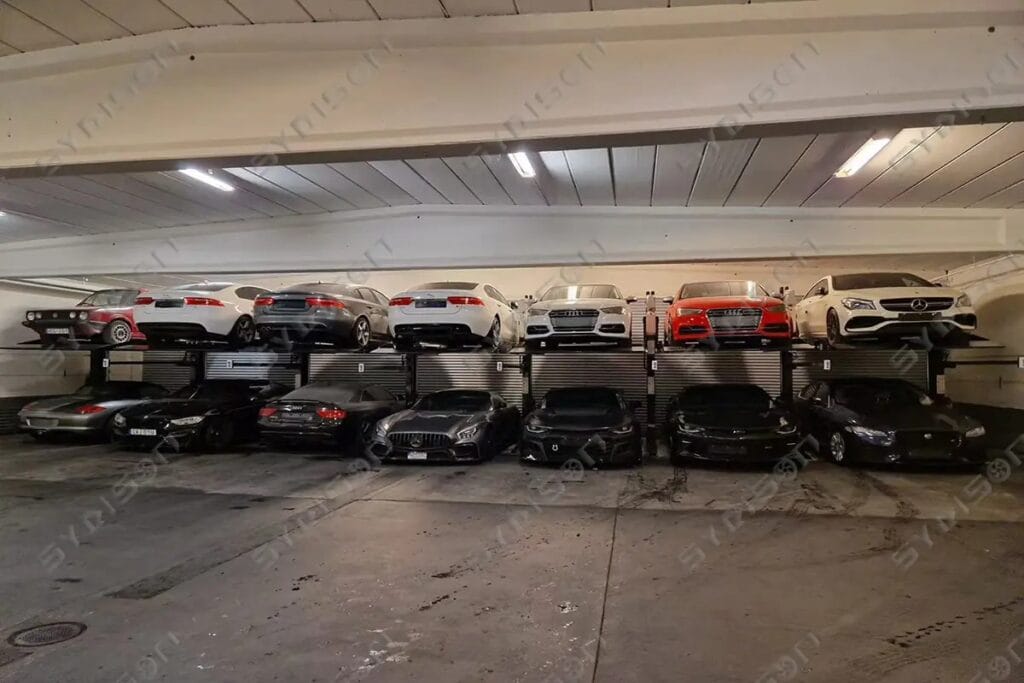
Two Post Parking Lift Maintenance
Unlike some traditional designs, Syrison two post parking lifts allow vehicles to reverse into the parking position, reducing interference from the columns and making vehicle access more convenient.
Standard platform width is 2100mm, and a wider 2300mm platform is available for larger vehicles and SUVs.
Main Maintenance Points:
Chain Inspection
Two post parking lifts usually use chains instead of wire ropes.
Regularly check:
- Chain wear
- Chain tension
- Lubrication condition
Column and Sliding Part Inspection
Check:
- Sliding blocks
- Guide rails
- Lubrication points
Hydraulic System Check
Inspect:
- Hydraulic oil
- Cylinder leakage
- Power unit performance
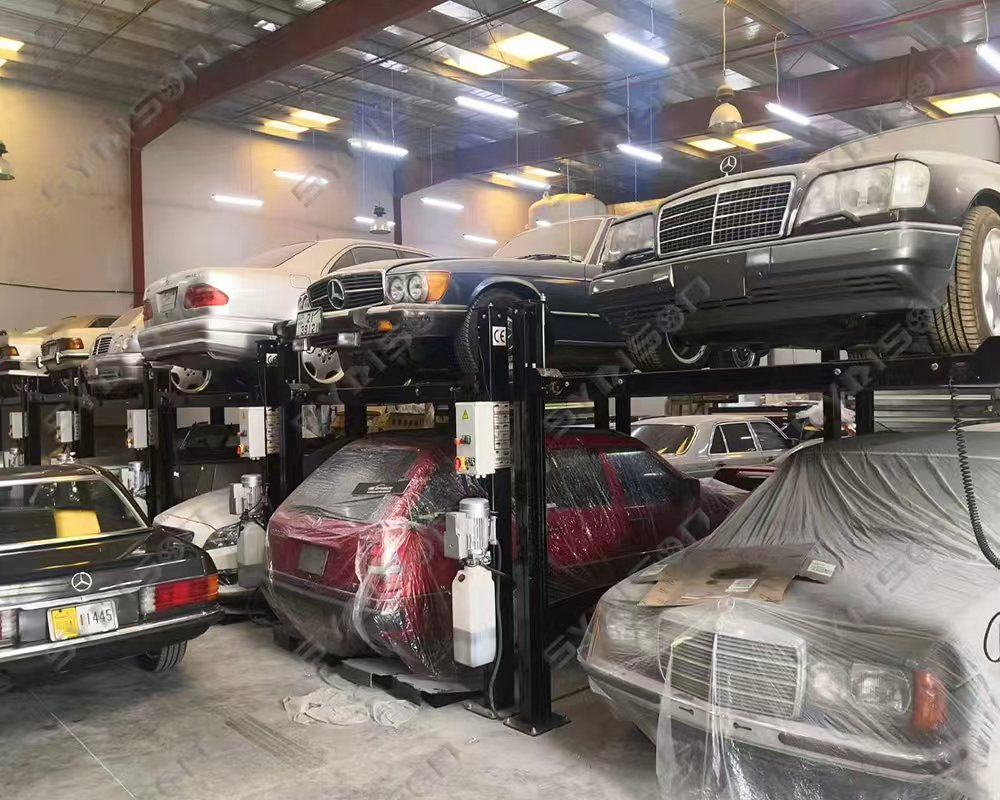
Four Post Parking Lift Maintenance
Four post parking lifts are widely used for vehicle storage because of their strong structure and high stability.
The most important maintenance point is keeping all lifting points balanced.
Wire Rope Adjustment
Four post parking lifts use wire ropes for synchronization.
Regular inspection should focus on:
- Wire rope tension
- Equal lifting height
- Pulley condition
If one corner is not balanced or one section cannot properly release from the safety lock, the system may stop operating.
Regular wire rope adjustment helps maintain smooth and safe operation.
Additional Safety Protection
Syrison four post parking lifts are equipped with:
- Wire rope anti-detachment protection
- Wire rope break protection devices
These safety designs provide additional protection during operation.
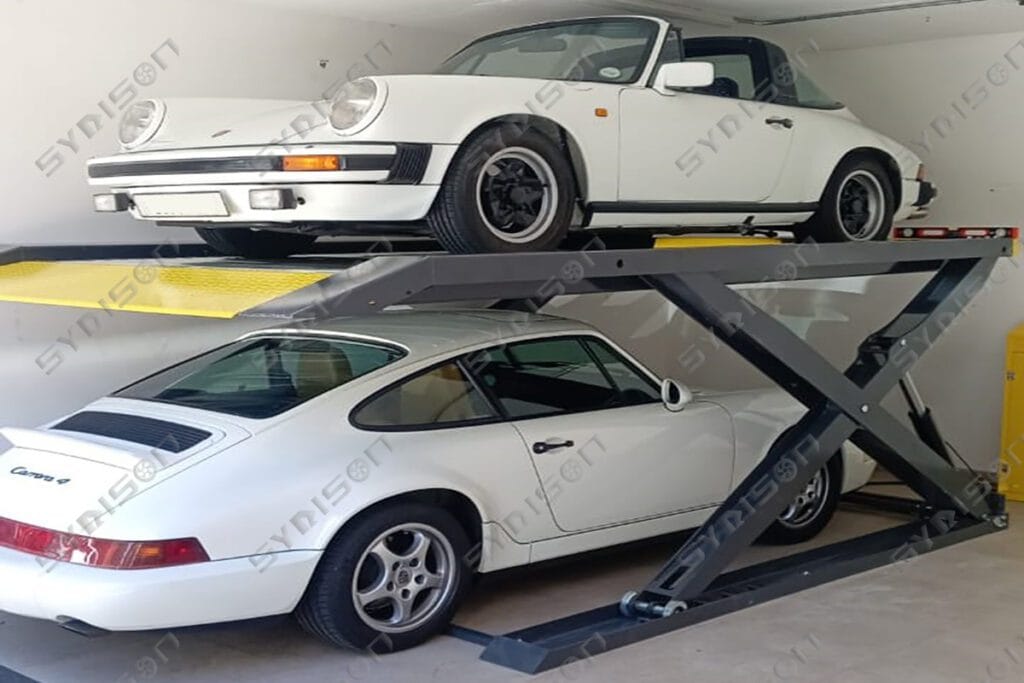
Scissor Parking Lift Maintenance
Scissor parking lifts have a different structure compared with post-type parking lifts.
Their main maintenance points include:
- Pivot pins
- Bushings
- Hydraulic cylinders
- Moving joints
Regular lubrication of moving parts helps reduce wear and noise.
Mechanical Locking System
Earlier scissor parking lifts sometimes did not include mechanical locking systems.
Modern designs provide improved safety by allowing the platform to stop at different heights and directly rest on mechanical locking blocks.
This reduces dependence only on hydraulic pressure and improves operational safety.
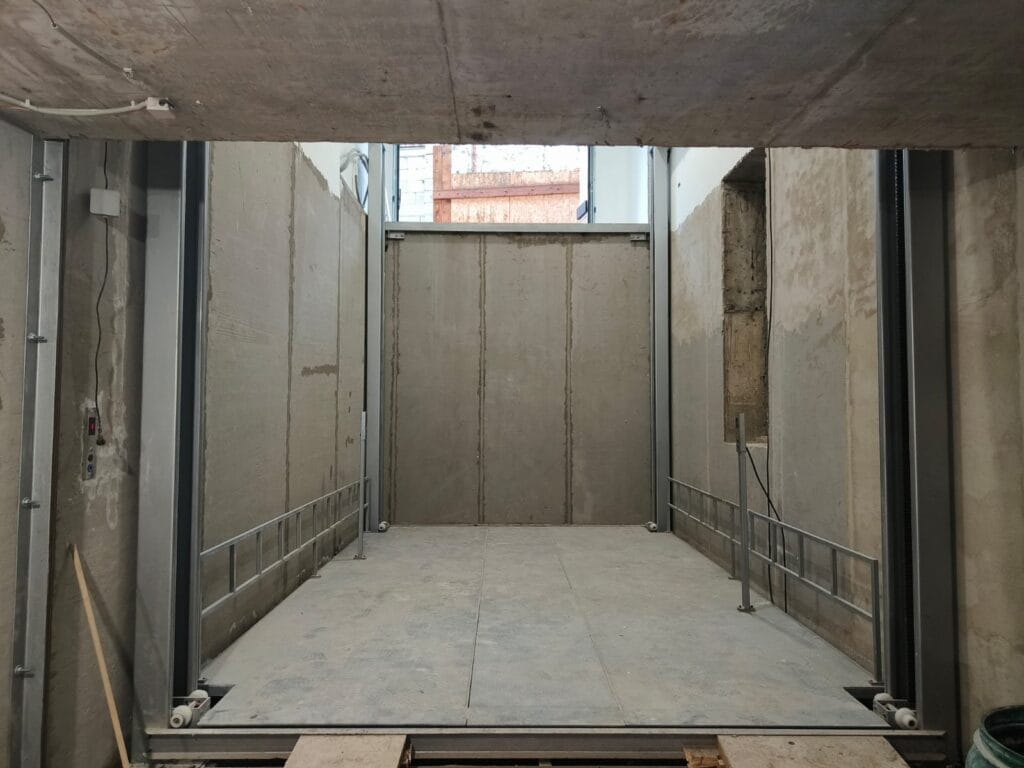
Underground Parking Lift Maintenance
Underground parking lifts require additional attention because they operate inside pits.
Important maintenance points include:
Drainage System
Water accumulation is one of the biggest risks for underground equipment.
Regularly check:
- Drainage channels
- Water pumps
- Pit condition
Moisture and Corrosion Protection
Inspect:
- Steel structure
- Hydraulic components
- Electrical parts
Keeping the pit dry helps significantly improve equipment durability.
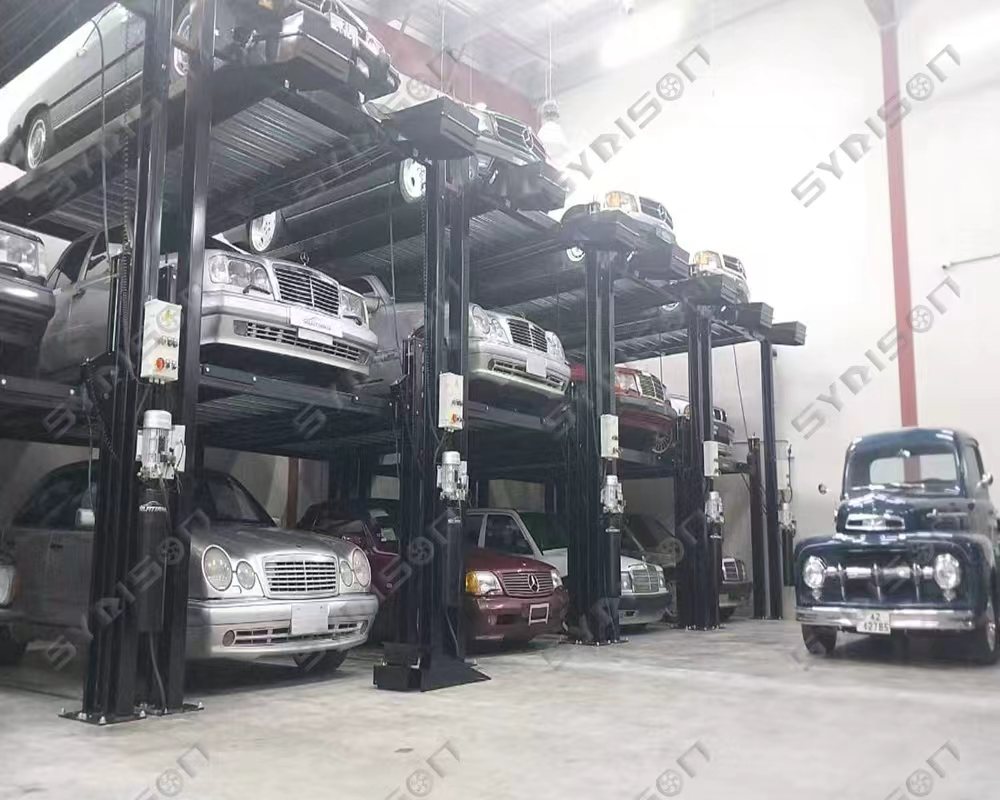
Triple Stacker Parking Lift Maintenance
Triple stacker parking lifts provide high-density vehicle storage by stacking multiple vehicles vertically.
Because they handle multiple vehicles, maintenance should focus on:
- Load balance
- Lifting synchronization
- Safety locks
- Structural inspection
Regular inspection is especially important for commercial parking applications with frequent daily operation.
Hydraulic Oil Selection for Different Temperatures
Choosing the correct hydraulic oil can improve equipment performance in different climates.
Summer Operation
For high-temperature environments, 46# hydraulic oil is recommended.
Advantages:
- Better viscosity stability at high temperatures
- Stronger lubrication film protection
- Helps protect hydraulic components
Winter Operation
For cold environments, 32# hydraulic oil provides better performance.
Advantages:
- Better low-temperature fluidity
- Easier pump operation
- Smoother lifting movement
Using suitable hydraulic oil helps extend hydraulic system service life.
Common Parking Lift Problems and Solutions
| Customer Feedback | Possible Cause | Solution |
|---|---|---|
| Safety lock cannot release | Insufficient voltage caused by unsuitable power cable | Replace with a suitable power cable |
| Cannot lift heavier vehicles | Hydraulic pressure needs adjustment | Adjust relief valve on power unit |
| Platform lowers too quickly | Hydraulic flow adjustment required | Adjust power unit valve |
| Four post lift stops during operation | Wire rope imbalance | Adjust wire ropes and check locking system |
| Abnormal noise during operation | Lack of lubrication or worn parts | Inspect and lubricate components |
Recommended Parking Lift Maintenance Schedule
Daily Inspection
Operators should check:
- Abnormal noise
- Operation condition
- Visible damage
Monthly Inspection
Check:
- Bolts
- Lubrication points
- Safety locks
- Electrical components
Every Six Months
Inspect:
- Hydraulic oil condition
- Chains or wire ropes
- Mechanical components
Yearly Inspection
Complete a full system inspection and replace worn parts if necessary.
Professional Maintenance Tips from a Parking Lift Manufacturer
Based on our experience as a parking lift manufacturer, we recommend:
1. Follow the Rated Capacity
Never overload the parking lift beyond its designed capacity.
2. Keep the Equipment Clean
Dust, water, and dirt can accelerate wear and corrosion.
3. Use Qualified Replacement Parts
Using unsuitable components may affect safety and equipment performance.
4. Train Operators Properly
Many problems are caused not by equipment quality but by incorrect operation.
Conclusion
Different types of parking lifts have different maintenance requirements. Two post parking lifts focus more on chain systems and column maintenance, four post parking lifts require careful wire rope adjustment and synchronization checks, while scissor and underground parking lifts require more attention to hydraulic systems, lubrication, and corrosion protection.
Regular inspection and proper maintenance can greatly improve safety, reliability, and service life.
With years of manufacturing and installation experience, Syrison continues to provide reliable parking lift solutions for customers worldwide.