
Proper and scheduled maintenance is essential to ensure the long-term safety, operational efficiency, and reliability of a Puzzle Parking System (PSH).
To minimize equipment downtime, prevent premature component wear, and extend the service life of the system, SYRISON recommends implementing the following Three-Level Maintenance and Inspection System.
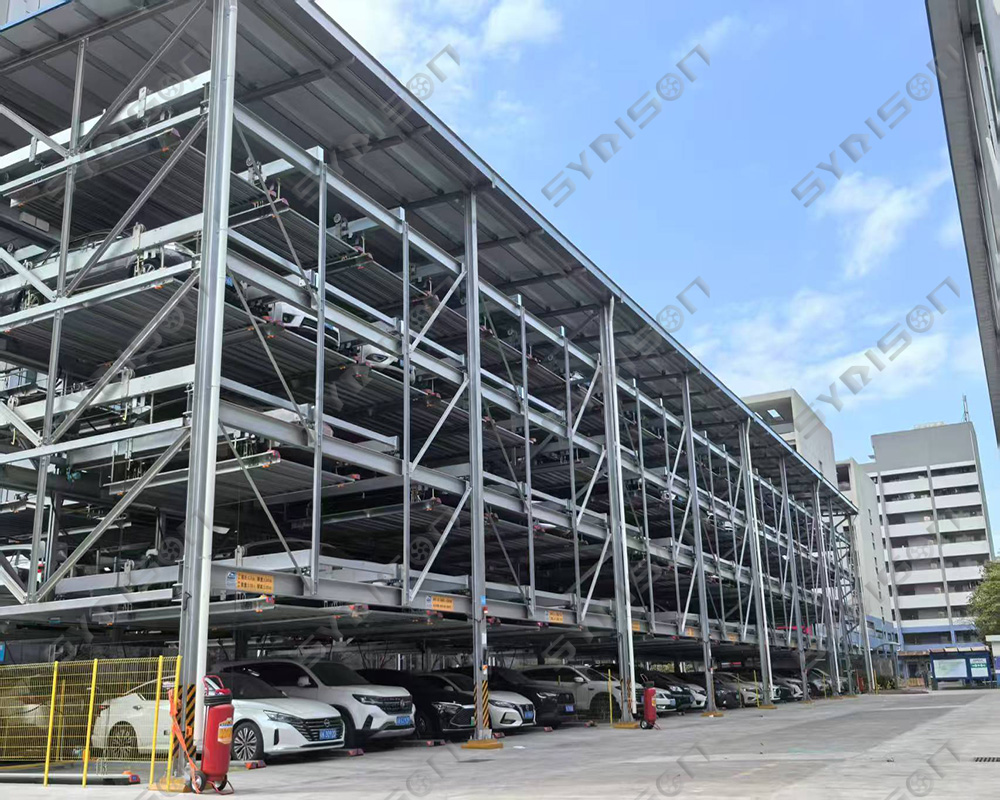
1. Daily Inspection – Operator Level
Daily inspections should be performed by trained site management or operating personnel before the system is put into operation.
1.1 Fasteners & Structural Components
Check all connecting bolts and nuts to ensure they are properly tightened.
Check the main structural components for any visible deformation, damage, or abnormal movement.
1.2 Lifting Chains
Check the tension of all four lifting chains.
Ensure the chains remain properly aligned and balanced at all four corners.
Check for any visible damage, excessive wear, or abnormal noise during operation.
1.3 Safety Devices
Check the operation of each anti-fall safety hook and its corresponding switch.
Confirm that all travel limit switches are securely fixed and correctly positioned.
Ensure that safety devices are not obstructed or damaged.
1.4 Tracks & Platforms
Remove dirt, debris, foreign objects, and standing water from the transverse sliding tracks.
Keep the platform surfaces and moving areas clean and unobstructed.
1.5 Operational Test
Run the system without a vehicle before daily use.
Confirm smooth lifting and transverse movement.
Check that control buttons operate correctly.
Confirm that the system stops at the correct positions.
Check for abnormal noise, vibration, or other unusual operating conditions.
If any abnormal condition is found, stop operation and contact qualified service personnel before continuing to use the equipment.
2. Periodic Inspection & Preventive Maintenance – Technician Level
Periodic maintenance must be performed by qualified service technicians according to the schedule below.
All inspections, adjustments, lubrication, replacements, and repairs should be recorded and signed off in the equipment service logbook.
2.1 Weekly Inspection
Review the general operating condition with site operators.
Clean and adjust the photoelectric safety sensors and check their detection performance.
Inspect the motor, sprockets, and lifting chains during operation.
Check the sensitivity and positioning of all limit switches.
Test control box buttons and indicator lights.
Check for abnormal operating sounds or vibration.
2.2 Bi-Weekly Inspection
Check lifting chain tension and inspect for visible surface wear.
Verify the position and operation of all anti-fall safety hooks.
Test the emergency stop switch.
Test warning lights and other safety indicators.
Confirm that all shifting platform plates stop accurately at their designated positions.
2.3 Monthly Maintenance
Inspect nylon rollers for wear, deformation, or damage.
Lubricate sprockets, lifting chains, bearing bases, and other specified moving components with suitable grease.
Clean the interior of the electrical control cabinet.
Clean transverse carriage tracks and remove accumulated dirt or debris.
Inspect chain connecting links and joints.
Check all structural connecting bolts for loosening or detachment.
Check moving components for abnormal wear or clearance.
2.4 Semi-Annual Inspection
Check the electrical insulation condition of the power supply circuits, motors, and control cabinet.
Measure lifting chain pitch and calculate relative wear elongation.
Chain relative wear elongation must remain below 3%.
Inspect major mechanical and electrical components for signs of deterioration.
2.5 Annual Maintenance
Carry out a comprehensive inspection of the mechanical, electrical, and safety systems.
Inspect the steel structure for corrosion, coating damage, or other deterioration.
Apply anti-rust touch-up paint to areas where the protective coating has been damaged.
Review the equipment service log and identify components requiring replacement or further inspection.
3. Preventive Overhaul System – Level 1 & Level 2
In addition to routine inspections, comprehensive preventive overhauls should be carried out by qualified or certified service technicians to maintain the long-term mechanical, structural, and electrical integrity of the system.
3.1 Level 1 Overhaul – Every Year
The Level 1 overhaul should include the following:
Drive System Cleaning & Lubrication
Thoroughly clean old oil, grease, dust, and other contamination from moving components.
Inspect components for abnormal wear.
Apply fresh grease to the specified lubrication points.
Replace severely worn or damaged components where necessary.
Lifting Chain Inspection
Measure the lifting chain pitch.
Check chain elongation and overall condition.
Ensure relative wear elongation remains below 3%.
Safety System Inspection
Inspect all anti-fall safety devices.
Check the physical condition and operating response of safety electromagnets.
Verify the correct operation of safety switches and related components.
Electrical Insulation Test
Test the insulation condition of power circuits.
Check motor winding insulation.
Check control circuit insulation and electrical connections.
4. Level 2 Overhaul – Every 2 Years
A more comprehensive overhaul should be performed every two years, or earlier if abnormal wear or operating conditions are identified.
4.1 Lifting Chain Replacement
Replace lifting chains when relative wear elongation exceeds 3%.
Replace chains showing serious corrosion, deformation, cracks, or other signs of damage.
4.2 Bearing & Mechanical Components
Inspect bearings, rollers, sprockets, shafts, and other major mechanical components.
Replace severely worn or damaged bearings.
Check mechanical clearances and make necessary adjustments.
Inspect motor brake clearances and springs and adjust or replace components as required.
4.3 Motor & Electrical System
Inspect motor operating condition.
Test motor coil insulation resistance.
Check electrical connections, control components, and protective devices.
Replace components that no longer meet operating requirements.
4.4 Structural Inspection & Refurbishment
Thoroughly inspect the steel structure for corrosion, deformation, cracks, or coating damage.
Repair damaged protective coatings.
Touch up or repaint the steel structure where necessary to protect against environmental corrosion.
5. Maintenance Records
For proper equipment management, all maintenance and inspection activities should be recorded in the equipment service logbook.
The maintenance record should include:
Inspection date
Equipment identification / serial number
Maintenance level
Inspection items
Problems identified
Corrective actions taken
Parts replaced
Technician name and signature
Next scheduled inspection date
Maintaining complete service records helps identify potential problems at an early stage and provides a reliable maintenance history for the equipment.
6. Important Safety Notice
Maintenance and repair work involving electrical systems, lifting mechanisms, safety devices, chains, motors, or structural components should only be performed by qualified and authorized personnel.
Before maintenance work begins:
Disconnect the power supply where applicable.
Prevent unauthorized operation of the equipment.
Ensure the platform is in a safe and stable position.
Follow the applicable installation and maintenance procedures.
Do not operate the system if any critical safety device is found to be defective.
If a serious mechanical, electrical, or structural abnormality is detected, stop using the equipment immediately and contact qualified service personnel.
7. Technical Support
Following this maintenance system helps minimize equipment failures, maintain operational safety, and extend the service life of SYRISON Puzzle Parking Systems.
For technical inquiries, replacement parts, maintenance support, or customized installation and maintenance manuals for SYRISON Puzzle Parking Systems (PSH), please contact our engineering team:
Email: sales@bestcarlift.com